Goth Identity: Is Goth Political? And Other Questions
*The following is an interview I did with a professor at Northern Arizona University who is completing a doctorate in sociology and is currently researching elements of subcultures. Our conversation serves to deepen my earlier blog posts, so I am excited to share it!*
Q: I wanted to ask what you mean by engaging with the community, as you have spoken about before. How would one create a relationship with the goth community?
A: I think most of us in the U.S. start online, and many of us stay there as a primary contact point. It all begins by having those conversations with other goths, interacting with bands, artists, and musicians, and looking into (not just at) the subculture in terms of the “whys.” If we just wear black or dark colors or collect skulls or other stereotypical “dark” things, there is nothing wrong with that, but they are nothing more than relics of another person’s aesthetic. (I think the skull thing is more of a darkly inclined concept in general and not inherently goth anyway.) Goths are always interacting with the “whys” because it takes that level of self-awareness to be sustainable within the subculture… Otherwise, we’re just creating a “look.”
I know you want a starting point… So, on a superficial level (to start), it can be as simple as making playlists and sharing them, or attending online goth events, going to clubs or concerts, and sculpting the goth experience in your own sphere. You can engage through:
1. Support (Even if you do not have the financial means to buy anything, just helping to boost fledgling artists through your “likes”, comments, and shares is a big help! Many goths veer away from constant consumerism, so you are not alone!) If you can give any money or donations directly to the artists, if you are looking to spend, that is preferred over utilizing platforms that capitalize on creative potential.
2. Symbiotic exchange (Conversations, hang-outs, or events online or in-person, or establishing relationships with currencies that are not necessarily monetary at all times)
3. Spawning your own music, art, or fashion to speak into the community as well. Even if you don’t want to sell anything, posting your music or art online for others to investigate is very nutritive for the ever- expanding community.
I am really trying to break it down here for people new to the subculture, but the thing about identity is that it isn’t static. It’s always engaging in some form of dialogue with the surrounding world and its structures. The extraction of goth as a hyper-individualized identity formed in solitary basements via “fashion” or a lifestyle, or just as a “sound” all on its own, without the deeper sociological implications, is just fluff. I’m not saying that goth cannot be discovered or realized in private spaces, but that, in and of itself, is not sustainable if there is no participation with the community in some way. Goth is music-based, but the community is what infuses goth with its life force. Engaging online is perfectly acceptable! Most of us live far away from any real goth scene. I think in-person goth clubs or nights are the best, though. Nothing beats that immersive, synergistic experience.
Speaking of goth from a relational standpoint between the individual and the subculture, as well as the relationship between both of those with the “mainstream” world, the outward expression of goth is not goth itself, but a byproduct of many different anthropological currents. You can only know or “be” goth by committing to it relationally through exchange and some level of insight gained through experience within it. That then brings up the question, “Are you always goth? Are there times when you are not in conversation with the subculture or the external world’s perception of the identity?” And honestly, I’m still formulating that answer for myself. After I do, it will still be subject to systematic inquiry and transformation. As of right now, I am leaning toward goth being a “doing” rather than a “being” identity, but that answer in and of itself is still vague and homogenous at best.
Q: With all of that in mind, is it difficult for you to define goth for new people?
A: I think it’s incredibly easy to condense something down to its bare components, which I had to do in my “What is Goth?” blog post. I think the more challenging aspect, and one of the most interesting, is just allowing people to connect with the unified thread of goth (the music) without dictating every morphological stage of realization. If we can let the exploration of goth and its identity as an inevitable outcropping present itself in due time to the people who commit to it, then we have provided the tools and frameworks to be explored. However, we have also enabled goth to continue being an evolving entity. It is invitational, but also shapes the basic trajectory. If you touch base with the genuine foundation of goth and continue down that pipeline, you will also most likely connect with the deeper valences of the goth experience. The idea that goth is a music-based subculture is non-negotiable, at least in U.S. and UK terms. However, the effects on culture, culture’s effects on goth, interrelational impacts, myriad interactions, goth identity in different contexts, interconnections to other spheres (gender, sexuality, political/religious/spiritual structures), and the human experience are incessantly expanding through every moment lived and breathed.
Q: It is a relief to know that one’s political party will not keep them from being part of the goth community, but I have heard you and other goth leaders explain in interviews some of the political intricacies of the subculture. Can you go further into that?
A: I am glad this is coming up because I think it helps to clarify past articles and blog posts I have written. Goth is not a gatekeeping entity in terms of personal religious or political proclivities (unless those opinions are externalized against others or in any way have racist or homophobic/xenophobic, etc. connotations). However, in my introduction to goth, my statement(s) regarding how one’s political identity does not preclude them from integrating into the subculture need to be taken with a grain of salt. Everything I said was true, but it would be incredibly reductive to say that goth is sanitized in any way from politically charged topics or influences. Also, anyone can be fake and hide behind an exterior that eclipses their true nature and personal standings.
Something we need to consider is that goth discovered its “identity” (and again it can be slightly different from culture to culture and community to community regarding exactly “why” it formed or how it first claimed shape) in the same spaces where queer and “deviant” (kink) communities were discovering theirs. These shared spaces were often the only safe places where all these marginalized identities could come together to vent, explore, express, and appreciate. This is probably why they are also conflated with each other, even though they are distinct communities.
There is a small joke about how the conversation flows when you meet someone new (or new to goth) who shares your passion for the music and aesthetic, and then eventually shares that they are “conservative.” Conservative identities can have many dispositions, and they are in no way unwelcome because of their personal beliefs; however, it is always one of those things where internally some of us are like: “Huh. And goth is what you arrived at in the end?” It is in no way meant to be disrespectful, but it is always slightly surprising given goth’s history of arising out of a rejection of neo-traditional gender roles, both through the music and the aesthetics.
Goth music and art have a history of fluidity and non-polarity that lacks the predestinarianism more endemic to those neo-traditional spaces. It just doesn’t have the same rigid localities for connection and expression, and I have had many non-goths tell me that first contact with goth was incredibly dissonant with an almost lethologic effect on their sense of self when they “taste-tested” the subculture. Paradoxically, it is also the music that shapes the core of the goth identity and serves as the anchor among the more amorphous elements. The rejection of the aforementioned gender roles was one of the most attractive things to me about goth after discovering the sound, given that I grew up in a conservative, purity-culture family cult and had been arguing with my parents about my role as a “woman” since I was four.
Having a political identity is not a disqualifier, but it is always a little surprising to find someone with an identity typically associated with queer, trans, or racial oppression (or erasure) when our past and present dynamic has been fostered by, defined by, and sustained by those very people whom some conservative movements have sought to extinguish. Even the goth bands with Christian members are often infused with a higher degree of skepticism or mysticism than the average fundamentalist would be comfortable with. Nazis and alt-right people are regularly kicked out of goth venues and events, but due to goth’s elevation in the public consciousness as a “deeper, wiser” alternative to other movements, people without a proper understanding of goth history and resistance are constantly infiltrating our spaces.
Even though goth is not affiliated with a specific political party, and you do not have to conform to or reveal your political leanings to others in the subculture, it would be a flat-out lie to say that goth isn’t political, with substrata that are, almost always, left-leaning. Many label heads buttressing goth music have strong themes and elements that would be considered transgressive by conservative groups. Aside from that, simply presenting yourself in the world as “goth” can be inflammatory or thought-provoking to others in terms of bringing them face to face with topics and concepts they might otherwise like to leave alone: death, fluidity of the self, and skepticism of neo-traditional modalities (though I want to clarify that many goths are not “obsessed” with death like modern media would lead one to believe). The point is that I said you do not have to morph into any political party and that goth is not officially affiliated with a political party… I never said it wasn’t political, though! 😉 I just ordered a t-shirt that says, “Goth is political.” The people who get it, get it, and at the end of the day, we know who is one of us!
Q: Do religious people seem to feel uncomfortable with goth?
A: There will always be people who regard goth as a seditious entity, and in some ways, it is very subversive. There are many religious people within the community, though, and goth is an environment that encourages diversity if you can be permissive to others and their experiences. Again, goth tends to undermine dualities while also engaging with them sometimes, so the answer is both yes and no. How is your political stance undermining systemic oppression? What do you mean when you say you are conservative? Where is the line between liberal and leftist to you? Can you uphold a patriarchal religion like Christianity, while also dismantling it…? Besides, not every religion is patriarchal or limited to a singular, alpha deity, which is probably what most people are thinking of when they wonder how the religious can coexist with goth. I do not feel that goth has formed in such a way to truly incite a need to create a dichotomous structure of who can and can’t commune with it, but every human is unique, and their personal frameworks and flexibility will determine how favorable the opinion(s) will be. We don’t allow Nazis in our spaces, but outside of those extreme identities and politics, things can get a little nebulous.
Q: Do you think that goth has become mainstream at this point? It seems like everyone wants to be goth these days.
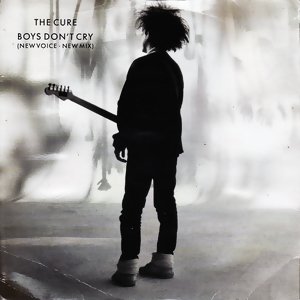
A: On the lighter side of things, the current, ephemeral interpretation of goth has become mainstream as people continue to borrow from its sense of style and musical development, and I think that is a unique thing to see. Granted, the final manifestation is almost always “darkly inclined” rather than goth. Has goth music truly become mainstream? Not really, from my personal purview. You have the really generic albums like Boys Don’t Cry (in my opinion, one of the least “goth” albums The Cure produced) that flirt with pop culture. Robert Smith has also repeatedly stressed that the band is not, and has never been, goth, not that he gets to decide everything. Many goths take issue with this as if it is a slap in the face to the subculture, but I actually respect his perspective. Apart from not wanting a band to fall into too “niche” a category, I appreciate the fact that Smith says he respects our subculture but has not truly been part of it himself. Much of his music fits well within the goth scene, but it is a breath of fresh air to see him explain that there were other amazing goth bands at the time, and that he just wouldn’t consider himself one of them. There is a lot of nuance and debate surrounding the band and its music, but I at least value his thoughts on the topic.
Goth has also become global, but global does not necessarily mean “mainstream.” Even in my own head, I separate the fashion and music into two different veins, since the fashion has been more easily abstracted from everything else. I think goth has become more distilled by pop culture than adopted by it as of right now, but the longevity of goth seems to laugh in the face of its own mortality, and I think that it has even greater potential to get its “foot” in the pop culture door… if that is even a possibility for it. Mainstream platforms have provided us with opportunities to experience our community, which heretofore were not available to us, so perhaps as more people visit each nexus, they will find goth bands they love as well!
Q: You said on the lighter side… what would your thoughts be on the less levitous side of the mainstream and goth?
A: This could be a huge conversation with many different branches. I think of Kim Kardashian “going goth” (ahem, not goth at all) as my starting point when evaluating the interaction of goth and mainstream, and it has also been the pioneering display that has really made me ask, “Why?” Why does the mainstream so often try to borrow from goth or flat out appropriate and reduce goth to commodified elements? One goth said, “Follow the money,” and they aren’t wrong, but I think it goes much deeper than that.
My opinion is that goth’s subversive nature makes it both seductive and unsettling. It’s seductive in that it’s emblematic in its approach to darkness (which has many faces, not just the Google-anchored death trope). But it is also unsettling, not just in its sound alone at times, but also in its contravention of mainstream concepts of ownership, dispersion, and self-sustainability in ways that are often anti-capitalist and erosive to capitalism’s core nature. I think that this is so uncomfortable for people playing that social game to rub shoulders with, they will do anything to blur the boundaries of goth and commodification as to assert some manner of authority over it and a sense of self-safety next to it. (Although, there were times based on my studies into goth history where I feel a strong seam of capitalism stitched itself intangibly into original goth identity, as seen with some of the competitive individualism in early goth emergence. This was not reflective of every goth community, though.)
Goth itself both tames and transcends structures by minimizing dependency on first-use market exchange (specifically with the original DIY nature that we are encouraging baby bats to look into more often) and dismantling mainstream structures via replacement (over time) with alternative customs, elastic definitions of “value” and identity, and the idea of engagement over acquisition. By appropriating goth identity as a “look” or fashion trend, it is more easily harnessed by plutocratic programs and made into a screaming coquette targeted at primarily white consumers who lack a sense of community, so they can declare, “This is me! This is me!”
It does this rather than regarding goth as a fluid and nonphysical identity that interfaces with many deeper social apparatuses and diverse cultures. The challenge the mainstream faces is directly related to the usage of economic power to “collect” on goth whereas goths themselves and the people who study them can mobilize their social power to “temper” mainstream output and place at least one foot in the realm of subdued consumerism. There is a vast economic system within goth- not just outside of it- but it is one that is more re-purposeful, egalitarian overall, and mutualistic at its nucleus. Goth is participatory and cannot be reduced to an opportunistic exterior. On some level, goth is emancipatory in that it consciously and unconsciously exists as an interstitial entity in contrast to the surrounding geography. This makes it unnerving to see that this social geography is much more attractive to “swallow up” and regurgitate into understandable elements. I think the online world has enabled goth to incentivize a stronger community basis than its original metamorphosis took on, so this is where the current tug-of-war with goth definitions seems to snag. The interconnective fibers of goth have made it indigestible via typical mainstream tactics, and if anything, it has served to highlight the differences between mere aesthetics and actual subcultures.
Q: You have said that the goth sound was what initially drew you into the subculture, but were there any other factors that contributed to your interest?
A: Oh, yes. The sound drew me in, but many other things “kept” me there. My history with music is an onerous one. Since I grew up in such a conservative home, my family believed that drums were “of the devil” and that electric guitars or heavy synthesizers were completely inappropriate since they would take the attention off theological considerations and place it on the music itself (because classical and conservative Christian music were all we were supposed to be listening to). This didn’t change until I was around the age of 17 or 18, and my mother slowly started listening to some “contemporary Christian” bands like Casting Crowns and Chris Tomlin. Before that point, which was still heavily constricted, it was all old fundamentalist hymns written in the early 20th century or before.
I also grew up playing the violin, starting at the age of four, which I honestly detested for many reasons. I did not have a normal approach to musical pedagogy or violin training as compared to most people who simply took lessons once a week and left it at that. I had a very rigorous schedule, sometimes having to practice violin for four or more hours a day, depending on what recitals, performances, or ODACS competitions were coming up next. There was a stretch of time where I was getting up at 5 a.m. as an eleven- and twelve-year-old to get to an early morning violin lesson before school. I was inducted into the Suzuki method of violin (which has a lot of criticism for good reason), and I was miserable. My violin story and experiences alone could fill up a large book, but if we combine my negative relationship with musical creativity with the heavy restrictions that constrained me from gaining exposure to music most people find pleasurable, it’s enough to say that I was unhappy with it. There was a time between the ages of (roughly) eight years old and thirteen years old when I would say that I truly hated music. To be fair to my past self, I had no idea what was “out there” in the world and was just speaking into the narrow range of my own experience. During commercials in between news events at home, the TV would be muted so as not to indoctrinate my brother or me into “sinful” sounds and thoughts, so even that was off the table most of the time. It was extremely stifling, to say the least. And yes, my parents knew I was unhappy, and they didn’t care. In fundamentalist homes, children are objects of submission, and they are expected to comply with all exercises of power placed over them. In other words, I didn’t have a voice, and that was how it was supposed to be according to my parents’ community’s belief system.
When I discovered goth music, I found something that expressed so many things I stood for all at once without always coming right out and saying it. Most importantly, it was one of the first things I discovered by myself FOR myself. It was a threshold I stepped over where I felt something was actually “mine” in that I chose it for myself without any external pressures or expectations. That alone has great meaning for my personal autonomy and sense of self. Factor in the queer and gender-bending or gender non-conforming themes throughout lyrics and aesthetics, and it is no wonder that I really felt at home. It would be quite some time before I realized I was greyromantic ace and non-binary, but the supportive wave of creativity and dark/ethereal backdrops were enough to carry me through until I found my freedom.
The idea that goth was one of the first things that I claimed as “mine” (not as in I kept other people from it, but felt as if it was one of the few things that resonated with me) was one of the reasons why I kept it mostly to myself for so long. No one at my conservative high schools, save for the one friend who identified my listening tastes as goth and my life partner, who I met in my senior year, had any idea what I listened to. Since my parents regularly went through everything I owned, including my phone and iPod, I never wrote anything genuine down (like in a diary), and I would relabel most of my goth songs with Christian titles. You can import artwork from different bands onto unlabeled albums in iTunes, so I would find small things in the titles I could loosely associate with the band or songs… and then overwrite the titles with fake Christian or classical ones. Clearly, much like life, goth will find a way. =)
Q: That’s so inspirational. Do you listen to newer goth bands, or are there any new ones you would consider to be goth?
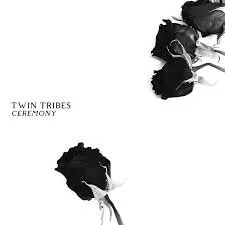
A: Yes! I listen to all of it, even though I have preferences. There are so many creatives still making goth music and starting new bands. Just because it’s “new” does not mean it is not goth. I think that after the deathrock revival of the early 2000s, many people were like, “Ew, not again. No.” Or so I have heard from elder goths! I think this is shifting again, and everyone thinks deathrock is cool, but people kept wanting more outside of that one genre. So, it served to benefit goth music in that goths and artists realized we need to continue making content if we didn’t want the entire subculture to be stagnant or flat-out replaced by off-the-wall experimentation. Experimentation was fundamental to the origins of the goth music movement, but even today, those who are experimenting are often trying to superimpose another culture’s or subculture’s sound into goth in a way that disrespects both (like trying to fuse hip-hop sounds with goth or trying to force metal’s massive legacy into goth). There is nothing wrong with experimentation, and many of those musical styles shared inspiration and parental icons with goth, but attempting to completely change goth’s sound to be more palatable for pop culture listeners isn’t going to stick with the rest of us. Even when these issues arise, goth is not dead, and one of the greatest joys all goths have is discovering newer, obscure goth bands!
If someone is new to goth, I think there is great value in going back in time and listening to the older works, many of which may still feel relevant today. You can start there, but you definitely do not have to stay there. I think many of us gravitate toward younger bands, and I personally find a lot of joy in helping them grow their followings!
Q: How do you feel about industrial music and its relationship to goth?
A: It’s true that industrial music is not the same as goth music, but that’s all it means to me in terms of the distinction. “Not goth” in no way relegates it to a lower space or less important space in my personal sphere. I have such deep respect for the constitutional roots of the industrial movement because it has such a strong queer and trans base, and my god, the lyrics are often just as great as goth if you investigate them. We share a lot of history, and I truly think of my industrialist friends and artists as family. The sound itself is usually overstimulating for me, but there is still much for me to appreciate in that realm.
Q: Some say that goth started long before the music movement began. What do you say to that?
A: I can understand why that is a common thought, but we have to keep in mind that when they say “goth,” it means something completely separate from the current goth subculture. The term “gothic” was first used by Horace Walpole in his work, but as we know, there is still a difference between the gothic and the goth. His usage of the term still connects it most deeply to architecture, ambiance, and literature. From what I understand, looking through goth history, the term “goth” was not popularized until the 80s, when its meaning became infused by the musical elements it was defining. It is a matter of semantics and language.
If someone is implying that the goth subculture’s influences precede modern times, then of course, in many cases, that would be correct. Many influential time periods have deeply informed goth and what it has become, long before even the Victorian/Romantic eras. Nevertheless, when museums try to do a walkthrough of “goth” history and point at the Visigoths as our progenitors, I think most of us roll our eyes since the two don’t have anything to do with each other.
As for when the music scene started, most people think that it began when Peter Murphy (Bauhaus) released the 1979 song “Bella Lugosi’s Dead.” There was some degree of dissent in goth groups and even on TikTok, which pointed to the idea that Murphy was heavily influenced by Screamin’ Jay Hawkins and that Hawkins’s work should be regarded as the first “goth-ish” creation… The issue is that the song that everyone is talking about is thought to be a performative piece targeted at white listeners, and that it was disrespectful to people of color. Until I read or hear a more critical analysis of the piece in question, I hold to the Bauhaus 1979 hypothesis. However, if you read my “Goth Identity: What is Goth?” post, I explain how Murphy credited the influence of Jamaican musical elements for his success.
Q: Can you list a few bands or artists that many people confuse with goth, but that are not goth?
A: That one is easy! Also, I would like to express that anyone who listens to the following artists is super cool, and there is nothing wrong with loving popular music! I am just listing artists that are not goth—no judgment attached. They are Marilyn Manson, Billie Eilish, Avenged Sevenfold, Skinny Puppy, any emo-associated bands (MCR, Fall Out Boy, Panic! At the Disco, etc.), metal bands, mainstream pop music, and any rap, hip-hop, or screamo music. Those all belong to their own musical groups and followings—not goth itself. Again, though, some older traditions that influenced those bands or genres also influenced goth in some ways.
Q: How long did it take for you to cultivate your goth music tastes?
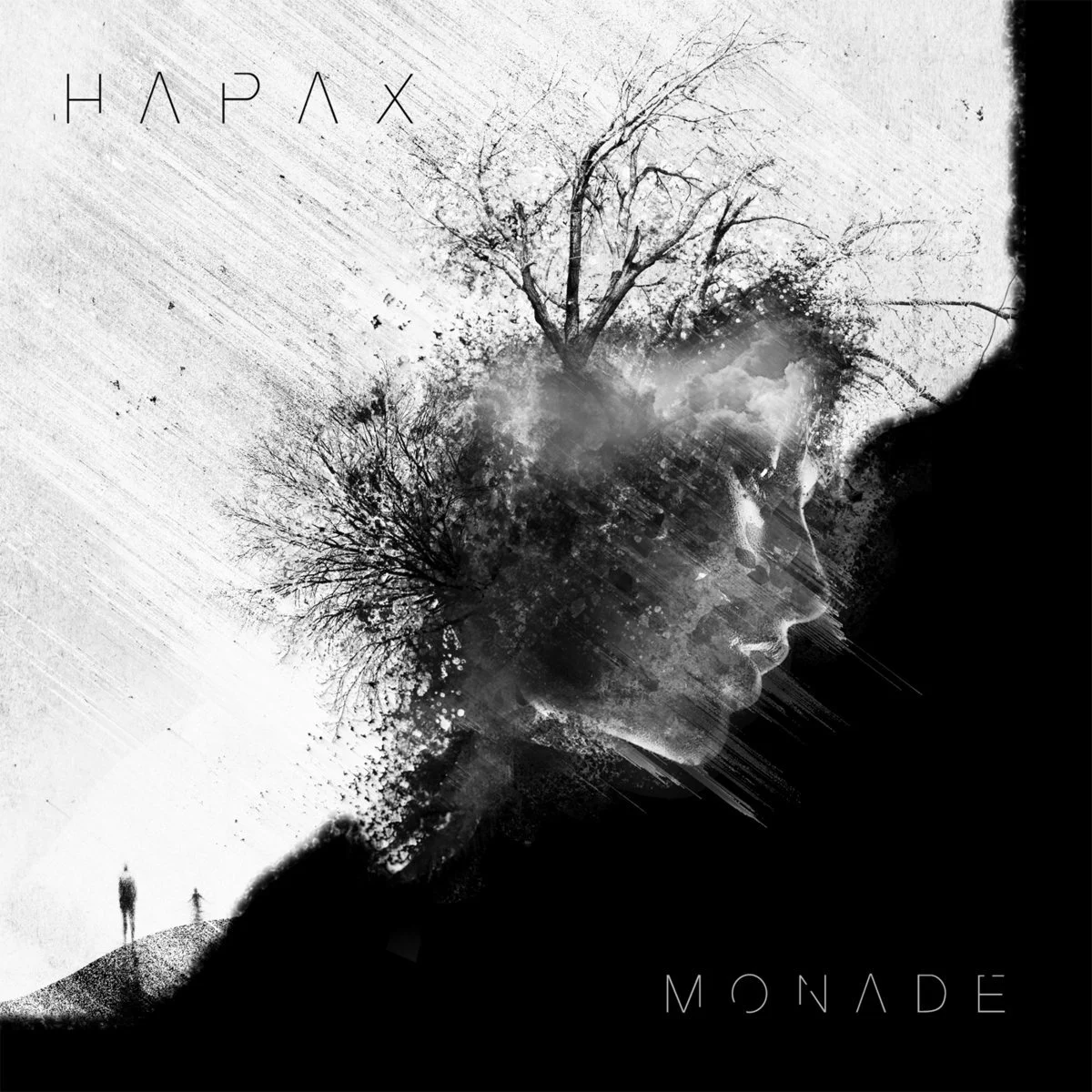
A: I am always discovering new music, so it is a lifelong journey! Honestly, it took me about 5-6 years to really be certain about what I liked. The reason for that is that when I first discovered goth, I was still living under a fundamentalist family roof, so it took me some time to be able to explore freely! The truth is that it can take many, many years to gain a firm handle on goth music. After that, you have all the juicy history tidbits and elder goth stories to glean from and appreciate! Angela Benedict, a goth I watch on YouTube sometimes, says she would love to be a goth historiographer. I concur!
Q: This question isn’t for my research, I’m just curious. How often do people argue with you about goth being a music-based subculture? Is there any wiggle room for goth to be something other than music-based?
A: This is being constantly contested. However, when it is, it is usually argued by people who have never even set foot inside a goth club or are just upset at the idea that they don’t really enjoy goth music. I understand that the idea of goth is attractive to people, and I do not go around bothering anyone or correcting baby bats online, but no, there is very little wiggle room regarding the musical basis of goth, at least in the United States and the UK. If you are goth, you will listen to or engage with the music in some way, shape, or form. It’s part of the passion and the love for what we are. If anything, I think possessing a love for goth music as the only introductory requirement for being part of the goth subculture is more inclusive than anything else. You don’t have to have a lot of money, dress a certain way (like many think), or have an abstract mindset. You just have to listen to and/or love goth music. Sure, it takes years to get acquainted with it, and many more to know it well, but that is part of the fun! None of us are ever done learning, because, thankfully, goth is not dead and new music comes out every month!
It always surprises me when people aren’t into goth music! There are so many sounds and energies present throughout its multiverse. I think almost everyone can find something they like, but I understand why, even if someone likes a song or two, they might feel more drawn toward a different subcultural or musical genre. If you do not like goth music, you can still be darkly inclined, and there is nothing wrong with that. A musical basis implies that goth is more than just its sound or lyrics, but the musical underpinnings are non-negotiable. We can tell who is one of us based on their musical knowledge and passion for the subculture!
Q: If you could tell baby bats something other than the core idea that goth is mostly about the music or is music-based, what would it be?
A: This is for everyone, not just baby bats. Please stop being skeptical of Indigenous and Black (and all POC) people within the goth movement. They have been here just as long as white people have, and were foundational to the core of our movement. They even had/have their own goth communities! Racism can be more subtle than just gatekeeping people of color out of the subculture. On TikTok, I see a lot of goth Indigenous and Black creators dealing with a level of musical interrogation that none of their white or light-skinned counterparts experience. Goth is goth regardless of skin color or appearance, as that never has been- and never should be or will be- criterion for identifying musical taste. These creators, goths, and artists deserve our utmost respect.
Q: Do you engage with the subculture online or in person?
A: Both! Because I live in a conservative, neo-hippie/new-age town, I engage online most of the time, though. There are underground scenes in Phoenix, but that is hours away. And even if I lived in an area with a more active scene, I would probably still keep the in-person events to an every-once-in-a-while status. I still attend online events, and even help a couple of friends who DJ at goth nights create setlists sometimes! I DJed at some small goth events a few years ago, but since I am no DJ expert, it had a big learning curve (really fun though!!). The goth subculture is one of my special interests as an autistic person, so I always find accessible ways to engage with it throughout my regular week.
Q: How does a goth recognize another goth?
A: Courting goth friends can be a bit of a process. I think that when baby bats or non-goths interested in the subculture decide to taste test a goth club or goth night, they expect to be immediately drawn into the inner goth circle, but this isn’t usually the case. The same goes for actual goths who are new to an area or social scene. Goths have to be careful about who they let into their spaces for many reasons, so they will often take their time getting to know the newcomers. Most of them are very kind and try to be welcoming, but one’s seat at the inner goth table has to be earned by showing respect and engaging with the music and culture in some way. Ultimately, goths recognize each other through their music… Preferably, their shared niche music tastes! It can be hard to tell who is simply dressing goth and who is actually goth sometimes, so I think almost everyone has learned not to make assumptions based on what they see alone.
Goth is like anything else… if it is truly part of who you are or represents a real interest of yours, it will be reflected in your personal life and knowledge base. Being goth isn’t something you can fake for long once you enter the in-person community. Someone’s YouTube playlists, Spotify playlists, and Bandcamp activity will usually indicate what they are into, and even if those can be faked, it will be clear who engages with the scene regularly and cares about the music.
Q: You have spoken a little bit about genres or subgenres of goth music. Do you have any favorites?
A: I listen to everything, but I am partial to darkwave and ethereal wave. I think the ethereal bands are stunning, and I swear they transport me to other dimensions.
Q: I have been doing research for my personal work, but I cannot tell the difference between many of the goth genres. Have you had problems with that?
A: Definitely. It took me forever to be able to tell new wave and new romantic music apart (both of which influence goth heavily, though they aren’t automatically goth in and of themselves). Usually, I just have to go and look at the band to see how others are labeling them. Part of that is because the differences between the two are minimal, and a lot of it comes down to their visual approach. Sometimes, the lines between genres get a little blurry on their own, so it can give you pause when you are thinking about where to place them on the goth spectrum. I have also seen some bands blend post-punk and light industrial influences together, so it can sometimes be hard to place them.
Q: What about goth types? How does one know what kind of goth they are?
A: That question always makes me laugh a little. It’s a fair one to ask since Google insists that there are such things as “health goths.” (I’m assuming that’s a pruned takeaway from the vegan conversations in goth circles?) Goth is goth, and once someone is out of their baby bat phase, they do not usually refer to themselves as any specific type of goth. Those labels are mostly made up by non-goths trying to understand the subculture. Now, someone’s personal taste could be more heavily influenced by New Romantic work over, say, post-punk, and that can be reflected in their fashion and stylistic interests. However, most people engage across the entire spectrum of goth music, and even if they gravitate to a fashion niche, they aren’t going to attach an addendum to the goth label.
Q: Has goth always been a part of who you are?
A: That’s a good question, but it’s one that I could take in many different directions. It conveys the same feeling as when someone asks if I have always been non-binary, or if I have always been greyromantic ace. I am not sure there is any way to tell, and I don’t really think so. If I were in a different world or different planet in another time, would I still be ace? Would it even be relevant? Do those things only exist as a response to my cultural surroundings? I can only speculate. I have long related the unfolding of goth identity to gender, and I heard someone talking about it recently on a gothic Livestream as well. They referenced Judith Butler’s work regarding the idea that gender is something you do, not something you fundamentally are at your core, which really resonated with me.
Identities are always shapeshifting and adjusting their ephemeral bodies to better engage with the inner self and the outside world. Whether it is goth or gender we are discussing, I have seen both queer and goth communities take a big step away from “born this way” rhetoric, since it takes the power out of our hands, and because identities can be in flux throughout one’s life as well. I will always respect anyone who really does feel that they were “born this way”, but that outlook is too atomistic for my personal experience. My love for goth is a part of me by now, but goth itself? I’m not sure that it ever really could be, especially if you drift into spiritual territory where someone believes in past/future/parallel lives. It is interesting to imagine how, if goth were an inextricable part of my being, it might translate to new times and spaces. However, since goth is a music-based identity, I’m going to err on the side of caution and say that I grew into goth, and goth also grew into me. Ripping my sequoia-length roots out of goth soil would be quite the task, but identity is a fluid structure. I am very certain it will continue to be a symbiotic conversationalist with my inner being throughout my current life on planet Earth, though.
Q: Are goths American and European for the most part, then?
A: No. Goths hail from nearly every continent and many countries. I have listened to goth music from Chile, Pakistan, India, Australia, Iceland, Mexico, and Egypt, just to name a few sources of interest. There are also goth communities everywhere: Africa, Europe, the Middle East, Latin America, and everywhere else. Goth is ubiquitous, so it is fascinating to dive into social ontology and the germinal development of our subculture from so many different perspectives.
Q: If you had to choose a label or some descriptor that reflected your fashion style, what would it be?
A: When I do wear the fashion, my favorite style is in the Victorian vein, both traditional and Neo-Victorian. I am not always feeling up to putting all that work in, though, and it gets very hot in the Southwest during the summer months, so corsets and crinoline are not always viable options. As an autistic person, I have sensory issues with fabrics on some days, so I can’t just wear whatever looks good. I have many outfits that do not fit neatly into any one style, and when it is sweltering outside, I usually wear one of my modified skinny-strap velvet dresses with accessories or just throw on a goth band t-shirt with shorts.
Q: Do you have any playlists you can share or suggestions for where to start listening?
A: Yes! I just switched over to a new Spotify account and started over, but I am building a good Goth and Goth-Adjacent playlist. I have also started a mini playlist for Baby Bats. I know it can be scary diving into all the music, and some of it just sounds weird to newcomers. So, I am formulating a short, simple taste test for the more recognizable and melodic bands that most people will feel drawn to when checking out the music. You can look up The Velveteen Victorian on Spotify for both! I have other playlists relevant to goth and some not at all relevant as well.
Conclusion
Once again, I appreciate having the opportunity to talk about the goth subculture and to inform academic research about our inner architecture! Goth as an identity is always evolving because its people are always evolving. Goths do not have to take their subcultural interests into academic territory, but studying the interrelationships among goth, philosophy, subcultures, sociology, psychology, neuroscience, and anthropology gives me life and makes my involvement with the subculture even more nectarous and opulent as a modicum for self and collective exploration.